

To choose a mailbox, decide four things in order: how your mail is delivered (curbside, door or cluster box), how much security you need, how many packages you get, and what material suits your climate. Then pick a USPS-approved box that fits those answers. Most homeowners end up in one of six types, all covered in our residential mailboxes collection.
This guide walks through each decision and points you to a deeper guide for every step, from USPS rules and mailbox height to posts, locks, package boxes and cluster units for HOAs.
Step 1: Find out how your mail is delivered
Your delivery method decides the type of mailbox before style ever comes into it. You usually cannot change it yourself.
- Curbside delivery: the carrier reaches the box from the vehicle. You need a post-mounted (or column-mounted) curbside box at the right height and setback.
- Door delivery: the carrier walks to your house. A wall-mounted box, a mail slot or a door-side box works.
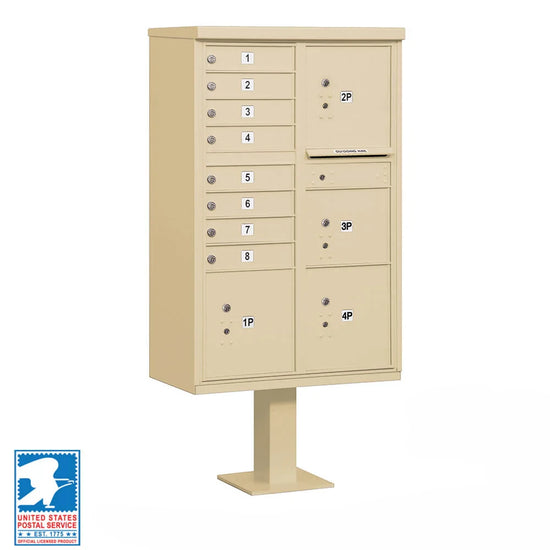
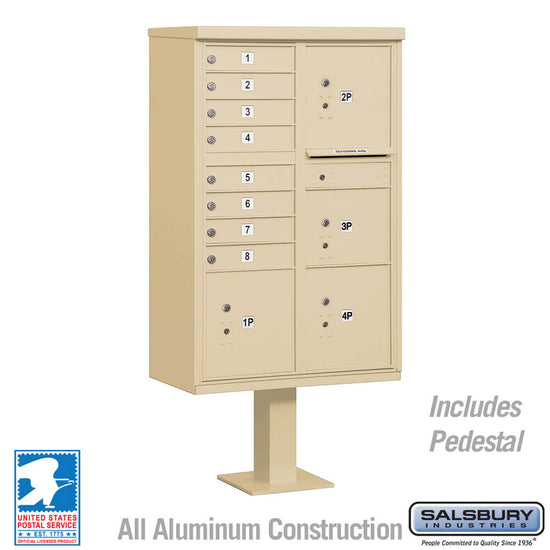
- Centralized delivery: newer subdivisions and apartments often get a cluster box unit (CBU) or 4C wall unit, usually owned by the HOA, developer or property owner.
Switching from a curbside box to a wall-mounted box needs your local postmaster's permission, according to USPS mailbox guidance. If you are not sure which mode you have, ask your carrier or the local post office.
Step 2: Know the USPS rules that apply to every curbside box
A manufactured curbside mailbox should carry the Postmaster General's approval, meaning it meets the USPS standard for curbside mailboxes (USPS-STD-7C). If you build your own or buy a custom-made one, USPS says it must meet the same standards. Wall-mounted boxes do not need the seal. Start with our USPS approved mailboxes and confirm the approval line on the product page.
USPS also asks that the bottom of the box or the point of mail entry sit 41 to 45 inches above the road surface, with the mailbox door 6 to 8 inches back from the front face of the curb or road edge, and that the post be buried no more than 24 inches. Your house number goes on the box, and your full street address if the box is on a different street from your home. Your local postmaster has the final say, and HOAs or towns may add their own rules.
For the full detail, read our USPS mailbox requirements guide and how high should a mailbox be.
Types of mailboxes for homes
Here are the six types most homeowners choose between, with who each one suits.
| Type | Best for | Trade-off |
|---|---|---|
| Standard curbside (post-mount) | Rural and suburban curbside delivery | Needs a post and correct placement; exposed to plows and vandals |
| Locking curbside | Mail theft concerns, travel, checks and prescriptions | Costs more; you need the key to collect mail |
| Wall-mount | Door delivery, townhouses, porches | Needs postmaster approval if you are switching from curbside |
| Large and package mailboxes | Frequent online orders | Bigger footprint, heavier post |
| Multi-unit (double, triple, quad) | Shared driveways, duplexes, small rows of homes | All households need to agree on one post location |
| Column and custom | Brick or stone columns, decorative and personalized boxes | Masonry adds cost and usually a contractor |
Standard curbside mailboxes
The classic tunnel-shaped box on a post. Most are steel or aluminum and come in standard and larger sizes. If you already have a sound post, browse our post mount mailbox collection for the box alone. For rural routes and long driveways, our rural and curbside mailbox guide covers size, flags and newspaper holders.
Locking mailboxes
A locking box accepts mail through a slot or baffle door and keeps it behind a locked door until you collect it. Look at the steel gauge, the lock, whether the latch resists prying, and whether the slot is big enough for your usual mail. Our locking mailboxes collection is mostly heavy-gauge steel models. Read the locking mailbox buying guide and how to prevent mail theft before you choose.
Wall-mount mailboxes
Wall-mount boxes suit homes where the carrier walks to the door. They range from small non-locking boxes to heavy locking steel units. Compare both styles in wall-mount vs post-mount mailbox, then browse our wall mount mailbox collection.
Large and package mailboxes
A standard box fits letters and flats, not the shoebox-sized parcels most households now get. A large mailbox holds more mail and small parcels, while a package mailbox adds a dedicated parcel compartment or hopper. Our guide to choosing a mailbox for packages explains the opening sizes to look for. Note that UPS and FedEx generally cannot leave items in your mailbox; here is why.
Multi-unit mailboxes for shared driveways
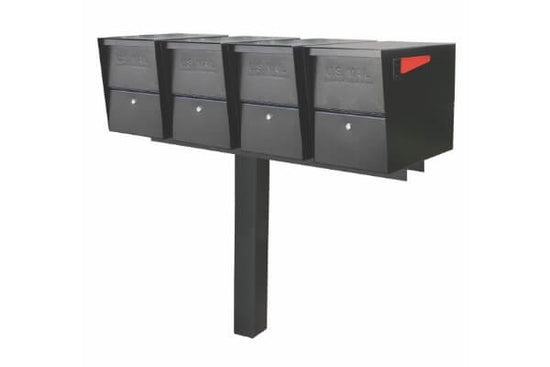
Two to five homes sharing one access point can share one post with several boxes on a spreader bar or crossarm. Browse multi-unit mailboxes or read double, triple and quad mailbox posts.
Column, custom and decorative mailboxes
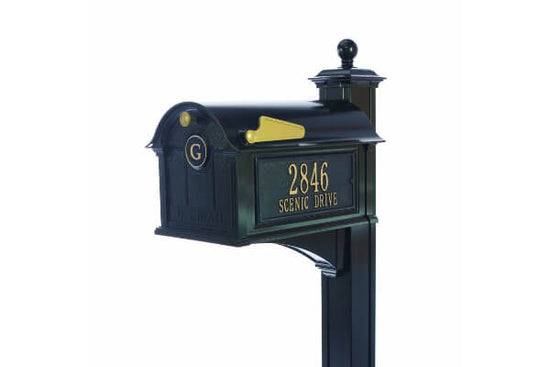
If you are building or keeping a brick or stone column, choose a column-mounted mailbox designed to sit in the masonry. For cast aluminum boxes with your name or address on plaques, see the personalized mailbox guide and modern mailbox ideas for contemporary homes.
Step 3: Decide how much security you need
Ask yourself three questions:
- Do you receive checks, cards, prescriptions or new IDs by mail?
- Has mail been stolen on your street, or do you travel for days at a time?
- Is your box out of sight of the house?
If you answered yes to any of them, a locking box is worth it. A heavy-gauge steel box such as the Mail Boss Mail Manager (14 and 16 gauge welded steel) has a patented anti-pry latch and a 12-disc high-security wafer lock, and stops casual theft. Keep spare keys in a safe place; our guides on getting a new mailbox key and mailbox lock replacement cover what to do when one goes missing.
Step 4: Size the box for your mail and packages
Mailboxes are sold by interior size and by the largest item the slot accepts. A household that gets mostly letters is fine with a standard box. If you get several parcels a week or travel often, pick a box rated for a week or more of mail and a parcel opening that matches what you order.
Check the measurements before you buy: mailbox sizes and dimensions lists standard curbside, large and parcel sizes in one place.
Step 5: Pick a material for your climate
| Material | Strengths | Watch out for |
|---|---|---|
| Galvanized, powder-coated steel | Strongest against impact and prying | Touch up chips so rust cannot start |
| Cast or extruded aluminum | Will not rust, good for coastal and humid areas, holds decorative detail | Thinner aluminum can dent |
| Stainless steel | Clean modern look, corrosion resistant | Shows fingerprints and scratches |
| Plastic or polyethylene | Low cost, rust free, flexes when hit | Fades and cracks with sun and cold over time |
Near the coast, aluminum or stainless usually lasts longest. In snow country, a solid steel box on a strong post, set back properly, handles plow spray best; read how to protect your mailbox from snowplows.
Step 6: Choose the post and mounting
The post matters as much as the box. Match it to the box's weight and footprint, and to the ground you are working with:
- In-ground post: the standard choice for soil, set in concrete or in gravel and tamped soil, buried no more than 24 inches.
- Surface-mount post with base plate: bolts to an existing concrete curb or sidewalk with masonry anchors.
- No-dig ground anchor: screws into standard soil and holds a 4 x 4, with no hole or concrete.
- Box and post package: the simplest route, since the parts are made to fit together. See our mailbox with post collection.
For posts only, browse mailbox posts and post accessories. Our mailbox post buying guide covers length, material and the height math, and installing a post without concrete covers ground anchors, base plates and gravel backfill.
Step 7: Plan installation and budget
Most homeowners install a post-mounted box themselves in a morning or afternoon, plus time for concrete to set. Call 811 a few business days before you dig so buried utility lines get marked, check HOA rules, and confirm placement with your postmaster if you are moving the box. Our mailbox installation guide has the step-by-step, for both in-ground and surface-mount posts.
For budgeting, see how much a mailbox costs for what drives box and post prices, and mailbox installation cost for typical third-party installer ranges if you plan to hire it out. House numbers are part of the job too: mailbox and house number rules covers size and visibility, and our address plaques help emergency crews find you.
Which mailbox should I buy? Quick picks by situation
| Your situation | Start with |
|---|---|
| Curbside delivery, mail theft in the area | Locking steel curbside box such as the Mail Boss Mail Manager |
| Lots of online orders | A package mailbox such as the Mail Boss Package Master |
| Busy road, you would rather not stand in traffic | A rear-access box such as the Mail Boss Street Safe |
| Door delivery, townhouse or porch | A locking wall-mount box |
| Coastal or humid climate | Aluminum or stainless steel |
| Decorative or personalized look | Whitehall cast aluminum with name or address plaques |
| Shared driveway | Double, triple or quad box package on one post |
Want specific models? See our best mailboxes of 2027 picks by use case, and if you are leaning toward Mail Boss, the Mail Boss mailbox comparison explains the differences between each model.
Buying for an HOA, apartment building or business
Centralized mail follows different rules. HOAs and developers usually need USPS-approved cluster box units, and apartment buildings use 4C horizontal mailboxes. Start with these guides:
- Cluster mailbox (CBU) buying guide
- HOA cluster mailbox replacement and who is responsible for cluster mailboxes
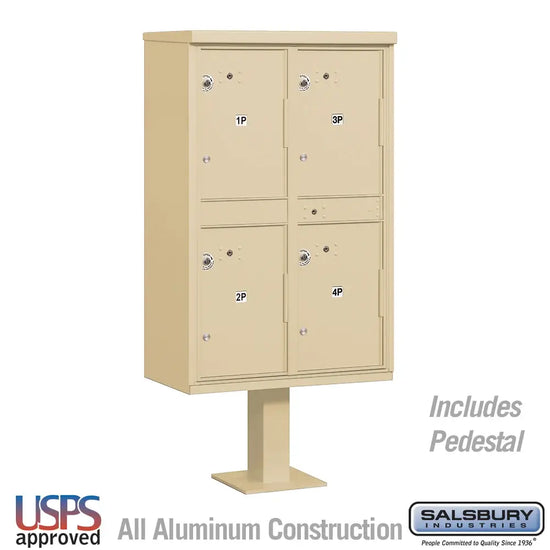
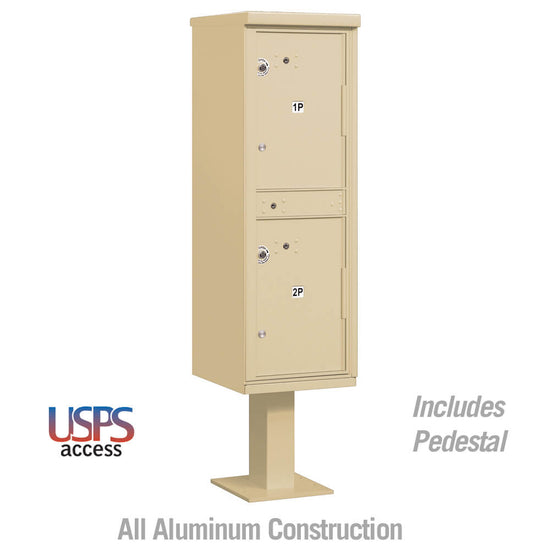
- Pedestal mailboxes explained
- Apartment mailbox requirements (USPS-STD-4C)
- 4C vs 4B+ vs cluster mailboxes
- What is a parcel locker
Browse community mailboxes and commercial mailboxes, or send us your unit count and we will quote the full project.
Frequently asked questions
What are the main types of mailboxes?
For homes: standard curbside (post-mount), locking, wall-mount, large or package, multi-unit and column or custom. For communities and buildings: cluster box units, 4C horizontal mailboxes and parcel lockers.
Does my mailbox have to be USPS approved?
A manufactured curbside box should meet USPS-STD-7C and carry the Postmaster General's approval. A custom-built box must meet the same standards, so check with your local postmaster. Wall-mounted boxes do not need the seal.
Is a locking mailbox worth it?
Yes if you get checks, cards or prescriptions by mail, travel often, or live where mail theft happens. Choose heavy-gauge steel with an anti-pry latch, and make sure the slot fits your usual mail.
What size mailbox do I need?
A standard box suits mostly letters and flats. If you get several parcels a week or travel, choose a large or package mailbox and check its largest accepted parcel size against what you order.
Can I switch from a curbside mailbox to a wall-mounted one?
Only with your local postmaster's permission. Delivery mode is set by USPS, so ask before you remove the curbside box.
What is the best mailbox material?
Powder-coated galvanized steel is the strongest. Aluminum and stainless steel resist rust best, which matters near the coast. Plastic is cheap and rust free but wears faster in sun and cold.
Shop
Start with our residential mailboxes or go straight to mailbox and post packages. Questions about fit, approval or mounting? Contact us and we will help you choose.
******It is always recommended to contact your local postmaster prior to installation. While most of our mailboxes are USPS-approved your local postmaster may have specific preferences in terms of mailbox types and installation location******


